THE BFF REACTIVITY PROTOCOL
A Four-Step System for Better Communication Between You and Your Dog
Created by Shaun Monahan
What You’ll Learn
The BFF Reactivity Protocol is designed to help you understand why your dog is reactive, build a strong foundation through structure and communication, and then apply those skills during carefully planned training sessions.
You’ll learn how to:
- Understand the emotion driving your dog’s reactivity.
- Build the foundation necessary for long-term success.
- Conduct productive reactivity training sessions.
- Help your dog make better decisions around distractions.
- Replace frustration and confusion with clear communication and consistency.
This isn’t meant to teach you every detail of dog training.
It’s a roadmap for the system we’ll use together throughout your training program.
Every dog learns at a different pace, and every owner develops new skills at a different rate. During our sessions, we’ll tailor this protocol to fit both you and your dog.
Our goal isn’t perfection.
Our goal is better communication, better decisions, and a relationship that lasts a lifetime.
BEFORE YOU BEGIN
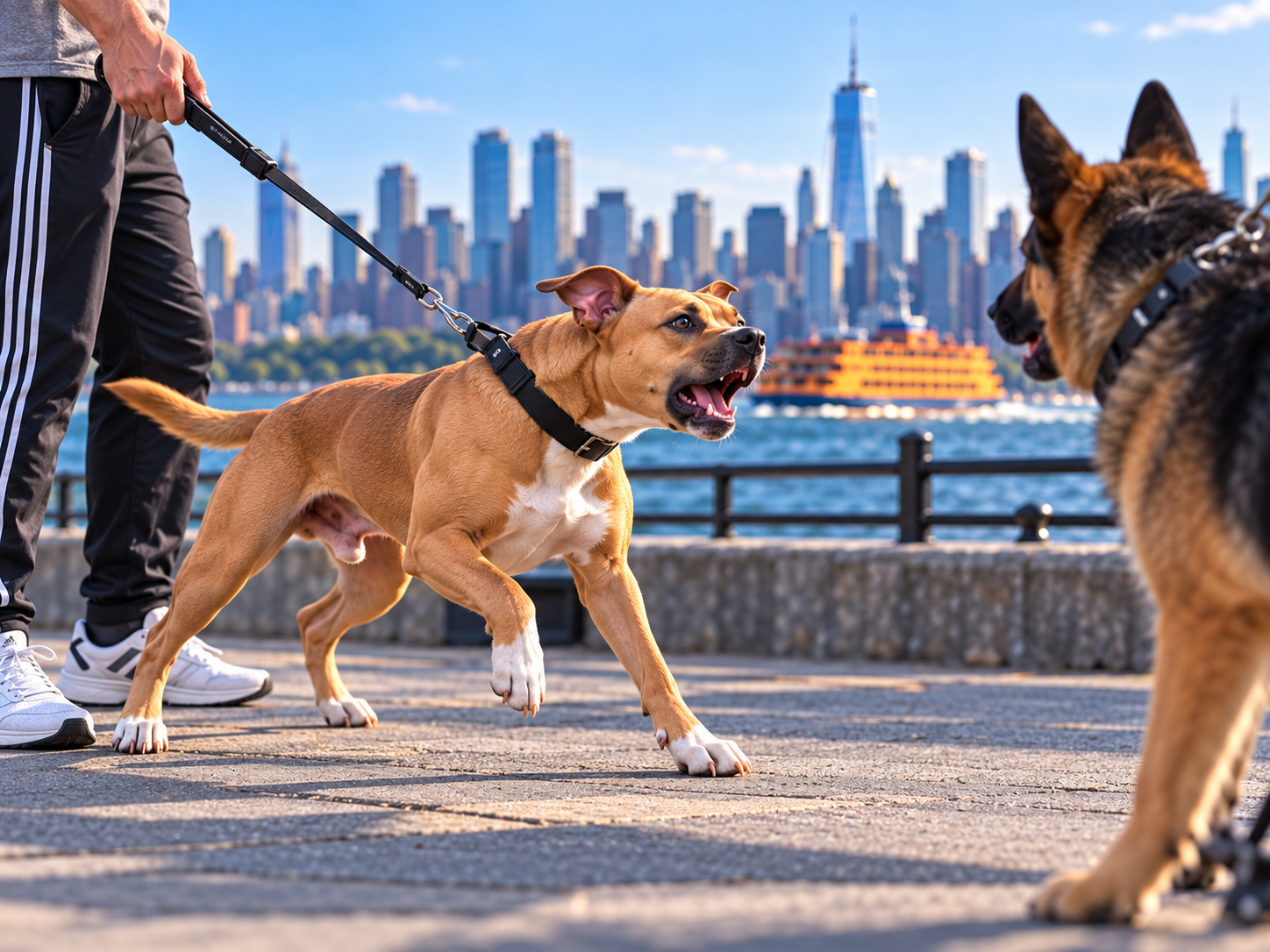
This protocol is a roadmap – not a substitute for hands-on instruction.
The appropriate training tools, level of consequence, working distance, and training setup will vary from dog to dog. Before using any training tool or correction, you should understand how to use it properly and your dog should understand what it means.
When in doubt, create more distance, regain control of the situation, and reset.
Never put yourself, your dog, another person, or another dog in an unsafe situation simply to complete a training exercise.
STEP 1: WHY YOUR DOG IS REACTIVE
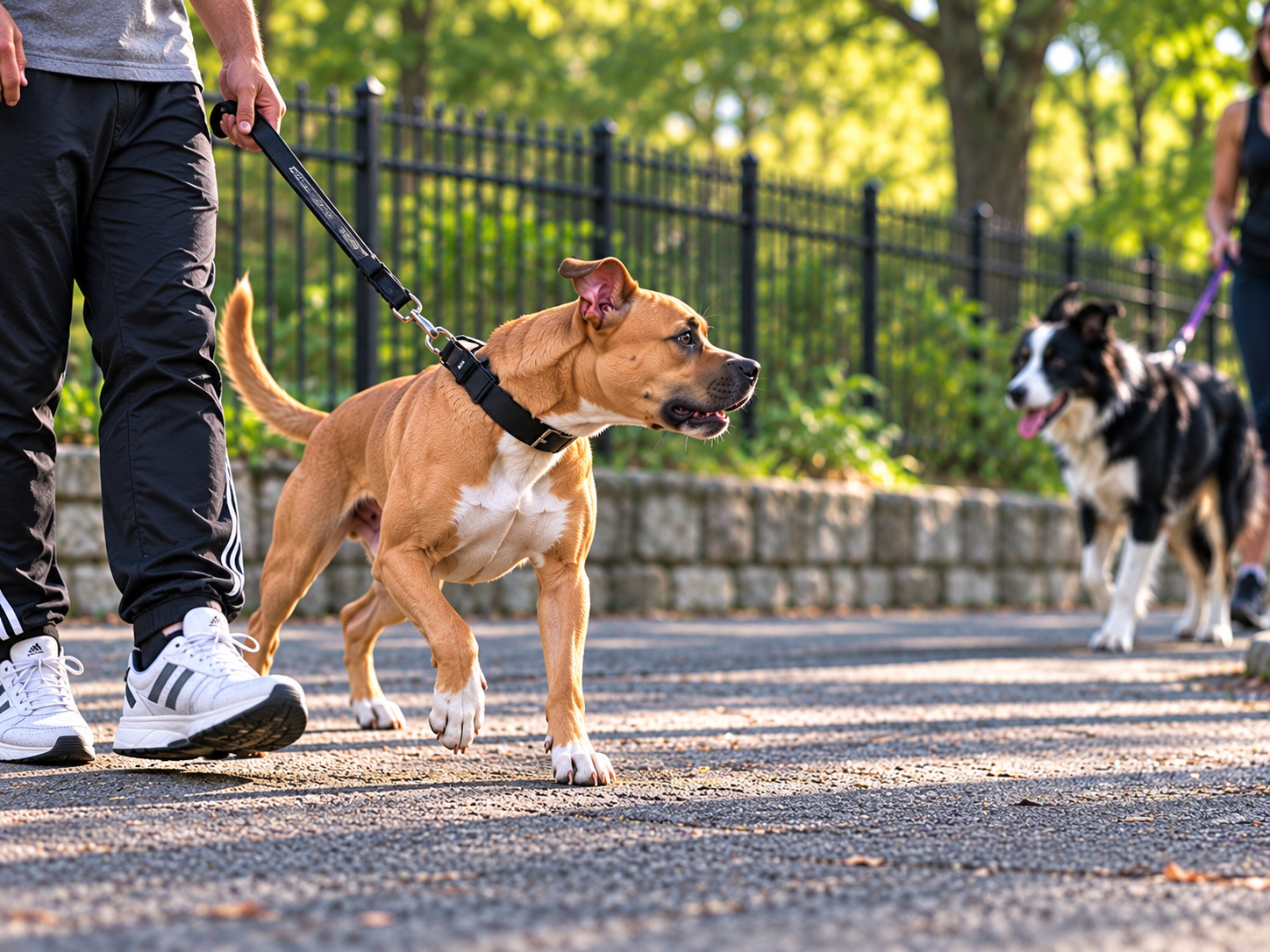
Understanding why your dog is reactive is the first step toward changing the behavior.
Reactive dogs aren’t bad dogs.
They’re repeating behaviors that, from their perspective, have worked for them in the past.
Whether the motivation is fear, excitement, frustration, or a combination of emotions, the behavior has been reinforced enough times that your dog believes it’s an effective response.
Before changing the behavior, we need to understand what’s driving it.
What Type of Reactivity Does Your Dog Have?
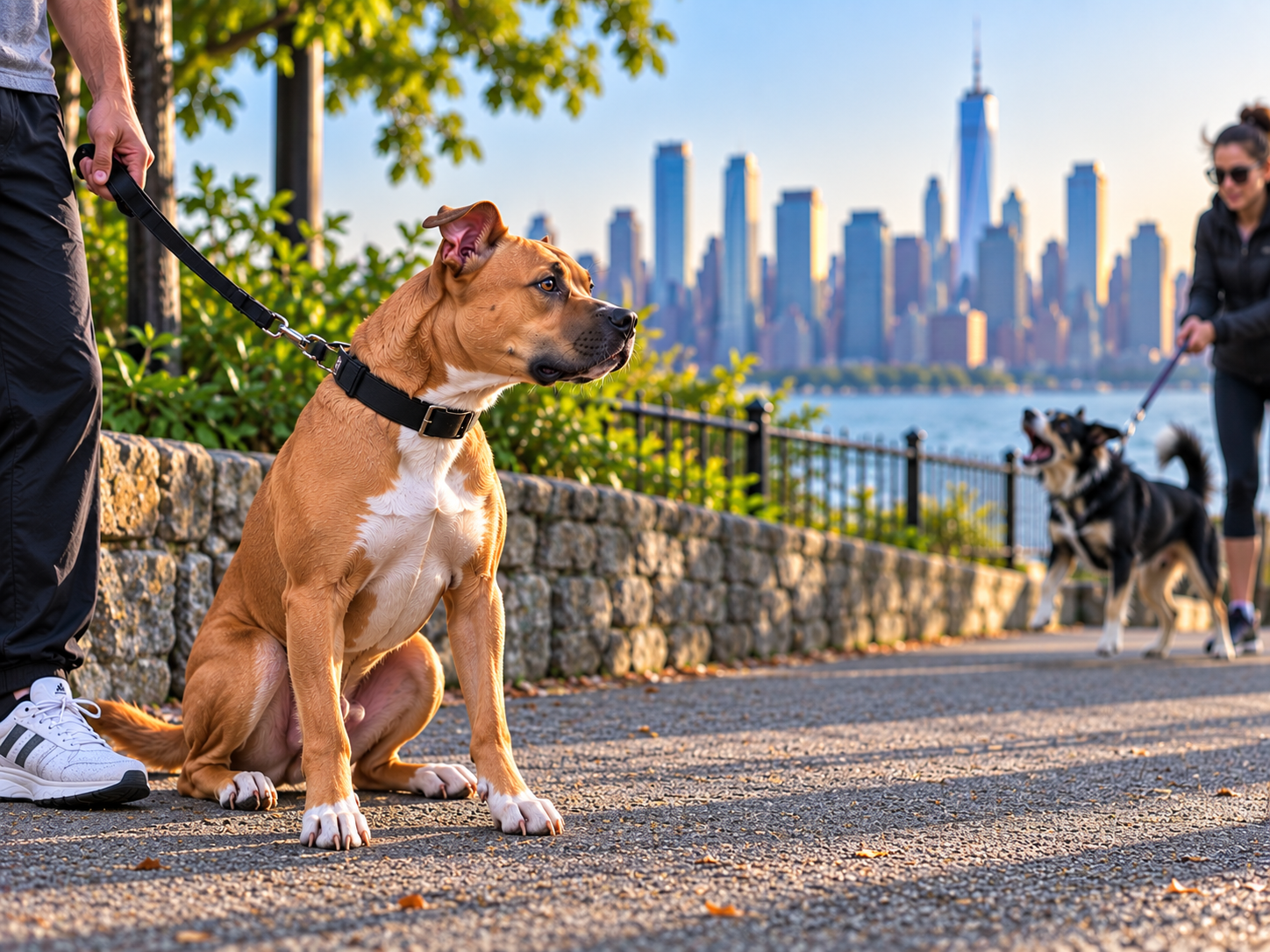
Identifying the type of reactivity helps answer two important questions:
- What emotion is driving the behavior?
- How is that behavior being reinforced?
To create an effective leash reactivity protocol, we first need to understand those two things.
Fear-Based Reactivity
Fear-based reactive dogs usually aren’t trying to start a fight.
More often, they’re trying to avoid one.
When another dog gets too close, barking, lunging, or growling may cause that dog to move away.
From your dog’s perspective, the behavior worked.
Based on their perception of what’s happening, they learn:
- “When I react, the other dog leaves.”
- “Reacting keeps me safe.”
Unfortunately, every successful repetition makes that perception feel more like reality.
Arousal-Based Reactivity
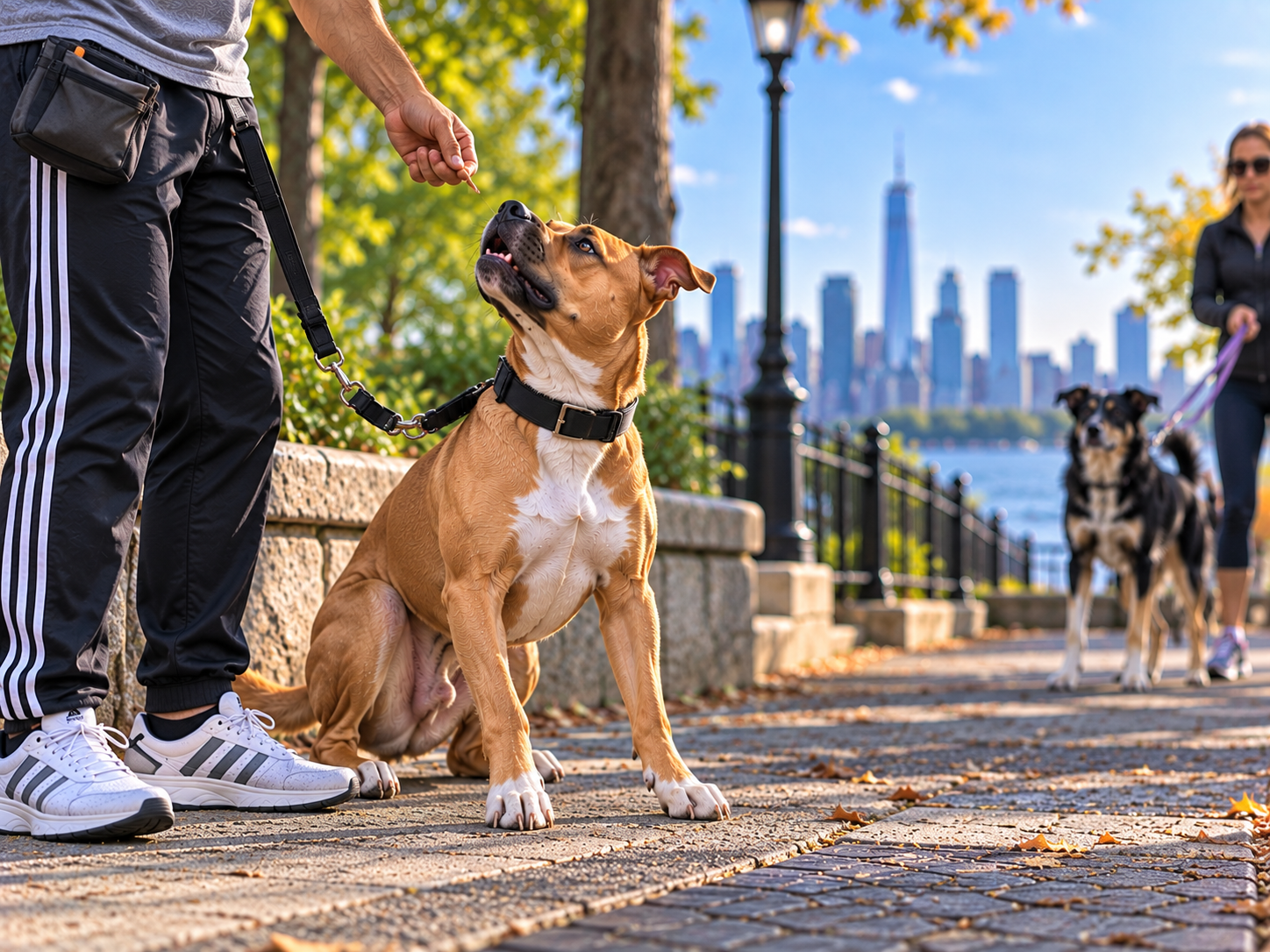
It’s important to understand that not every reactive dog is afraid.
Some dogs become overly excited, frustrated, or overstimulated when they see another dog.
They may desperately want to interact but become so emotionally overwhelmed that they lose the ability to make good decisions.
The behavior may look similar to fear-based reactivity.
The emotion driving it is completely different.
Combination Reactivity
Many dogs fall somewhere in the middle, while others have more than one reason for their reactivity.
They may feel uncertain around other dogs while also becoming highly aroused.
Fear may fuel the reaction, while excitement may intensify it.
The combination can produce stronger reactions and may require additional patience and consistency.
Why This Matters
Truly understanding why your dog reacts can significantly change how you approach their training.
Instead of simply trying to stop the behavior, we can address what’s driving it while teaching your dog a better way to respond.
That’s how long-term change happens.
Actions
- Identify what type of reactivity your dog has.
- Determine how the behavior has been reinforced.
- Pay attention to what happens immediately before and after your dog reacts.
- Remember that every successful reaction makes the behavior more likely to happen again.
BFF PRO TIP
Never forget: Your dog’s behavior always makes sense to your dog.
The better you understand why they’re reacting, the easier it becomes to show them a different, more productive way to respond.
Key Takeaway
Reactive behavior is far from random.
At its core, it’s driven by emotion and strengthened through repetition – often without the owner even realizing it’s happening.
Understand the why, and you can begin changing the behavior with a clear plan.
STEP 2: SET YOUR FOUNDATION
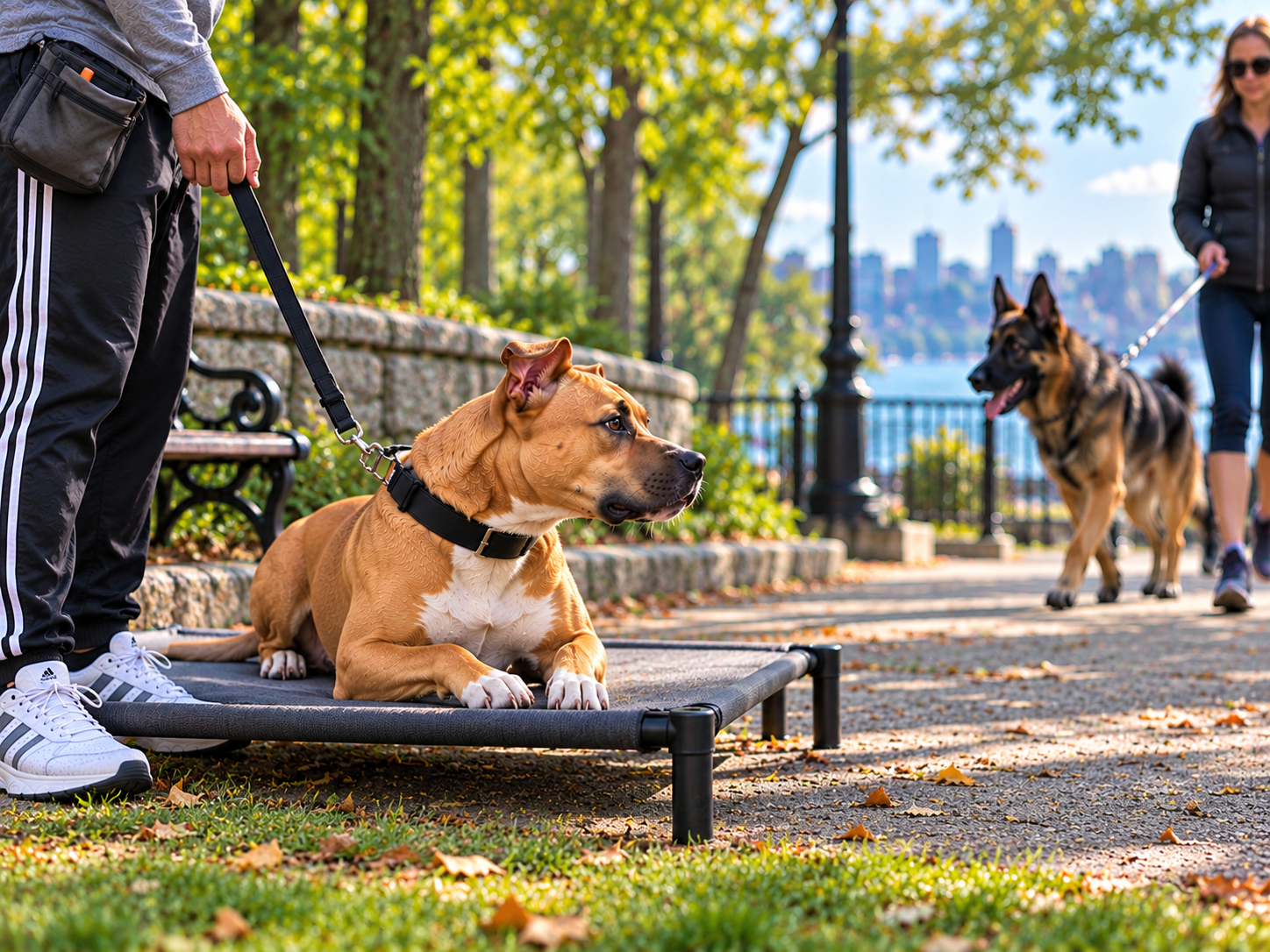
One of the biggest mistakes dog owners make is trying to fix reactivity before building a solid foundation.
Imagine trying to ride a unicycle without ever learning to ride a bike – even with training wheels.
It might be possible, but you’ve made an already difficult task significantly harder than it needs to be.
Before asking your dog to make good decisions around major distractions, teach them how to make good decisions during everyday life.
That usually involves teaching your dog at least the basics of obedience.
Everything in this section will help you understand why that foundation is so important.
Stop Unproductive Social Interactions
First and foremost, we need to stop unproductive social interactions.
Actions
- Stop visiting dog parks for social interaction.
- Stop taking your dog to doggy daycare.
- Stop allowing on-leash greetings with unfamiliar dogs.
- Avoid situations where your dog is likely to rehearse reactive behavior.
Why This Matters
Every time your dog practices reacting, the behavior becomes more familiar.
Until you have the skills to influence your dog’s decisions around other dogs, repeated uncontrolled exposure gives them more opportunities to practice the behavior you’re trying to change.
That’s why some baseline form of obedience training is very important before we try to move forward – AKA training wheels.
For now, your goal isn’t socialization.
Your goal is education and improving communication between you and your dog.
Appropriate social interactions can be reintroduced later in the right environment and under the right circumstances.
Key Takeaway
Your dog can’t stop practicing a behavior if you continue providing opportunities to rehearse it.
Create Order Inside Your Home
Training doesn’t begin outside.
It begins the moment your dog wakes up.
To make your training more reliable in the long run – and take less time – it should start in an environment where there are little to no competing distractions.
Actions
These are the things you should do the day you decide to address your dog’s leash reactivity – and stick with them, in most cases, throughout the entire process.
- Crate your dog whenever you cannot actively supervise them.
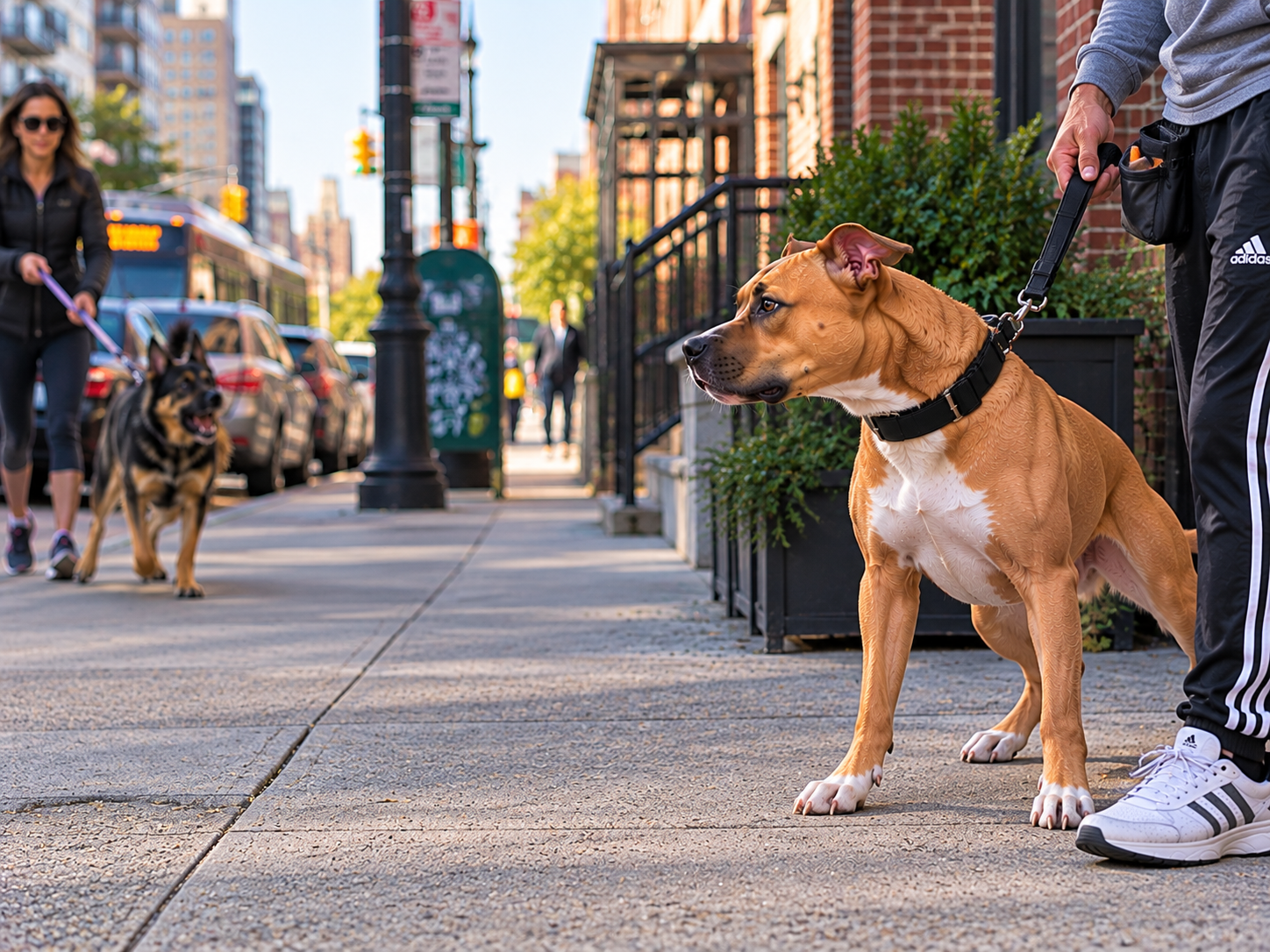
- Use a place board when supervision is possible.
- Keep a lightweight leash attached while your dog has freedom inside the house.
- Create a predictable daily routine.
- Maintain consistent household rules.
Why This Matters
Structure reduces confusion.
When expectations remain predictable, dogs have an easier time making good decisions.
As reliability improves, your dog earns more freedom.
Freedom should be earned – not thought of as a birthright.
Key Takeaway
Clear expectations inside the home make clear expectations outside the home much easier to understand.
Loose-Leash Walking
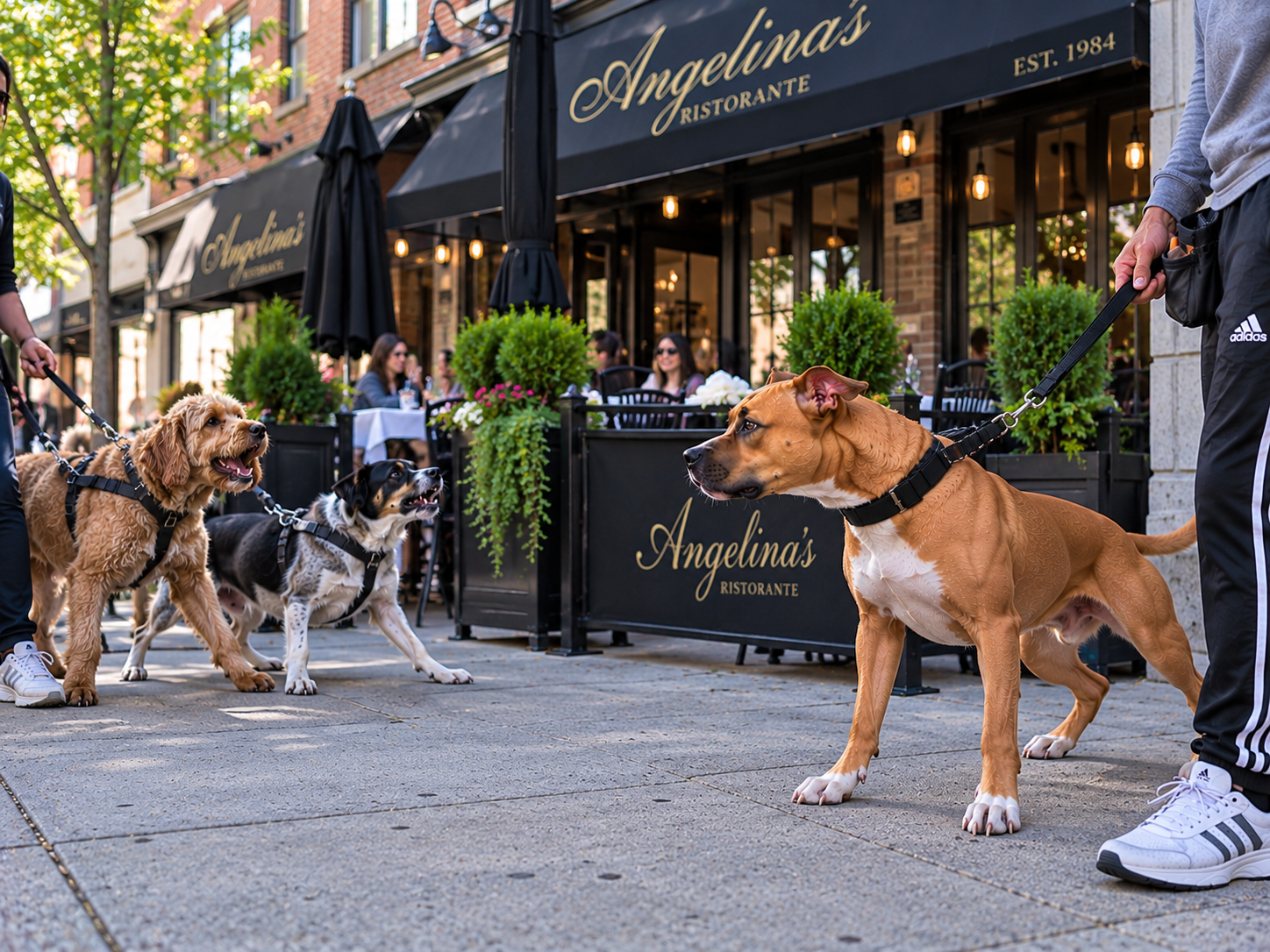
Most reactive dogs also pull on the leash.
That isn’t a coincidence.
Pulling tells us that your dog may have learned – or simply perceives – that pulling is not only part of the walk, but also a way to get what they want.
Loose-leash walking becomes the foundation for everything that follows.
Actions
Our goal is to use the least aversive collar that your dog responds to appropriately.
For some dogs, a standard collar may be all that’s necessary.
For a dog that has developed a strong history of pulling and has learned that pulling gets them where they want to go, a properly fitted 2.25 mm Herm Sprenger prong collar may be the appropriate choice.
Regardless of which collar is appropriate for your dog:
- Begin in a quiet environment with minimal distractions.
- Complete prong-collar conditioning if a prong collar is deemed necessary.
- Teach U-turns.
- Practice sporadic walking.
- Consistently address leash pulling.
- Continue until loose-leash walking becomes your dog’s default behavior.
Why This Matters
Loose-leash walking teaches your dog that calm behavior creates forward movement.
It also improves your timing, leash handling, and communication.
Every successful walk becomes an opportunity to praise your dog and let them know you’re happy with their behavior, while giving them another opportunity to practice self-control.
BFF PRO TIP
Loose-leash walking isn’t just about having a loose leash.
It’s about teaching your dog to pay attention to the person holding it.
Key Takeaway
Dogs don’t resent clear boundaries. They almost always embrace them.
Obedience
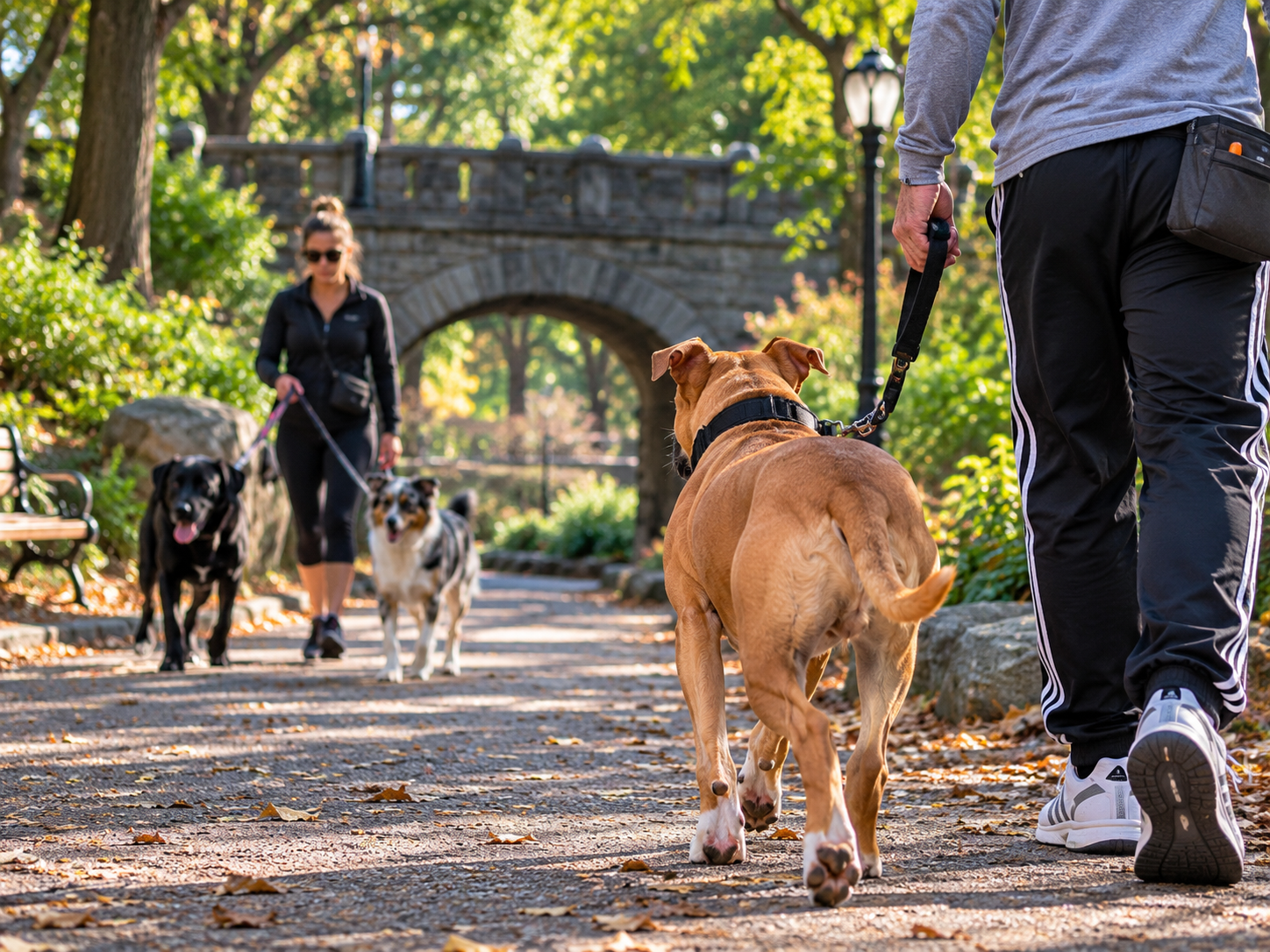
Obedience isn’t about controlling your dog.
It’s about creating a common language.
Every exercise strengthens communication while teaching your dog how to succeed.
Actions
- Teach a few basic commands using food and leash pressure.
- Add verbal commands.
- Build duration.
- Gradually introduce distractions.
Some of those distractions might include:
- Throwing a ball.
- Running away.
- Clapping.
- Talking excitedly.
- Other dogs at a distance.
Why This Matters
Obedience develops much more than commands.
It improves timing and consistency and teaches your dog to work through distractions without becoming overwhelmed.
Most importantly, it teaches both of you how to communicate.
Key Takeaway
Good training means creating a plan, testing it, evaluating the results, and adjusting your approach.
Play
For many dogs, structured play becomes one of the most valuable parts of the entire program.
Play builds motivation, strengthens your relationship, increases engagement, and provides an appropriate outlet for energy.
And just as importantly…
It’s fun.
Actions
- Play at approximately the same time each day.
- Keep sessions short and engaging.
- Build value in a favorite toy.
- Teach Tug or Fetch.
- Teach your dog to bring the toy back.
- Teach a reliable release.
Why This Matters
Structured play develops:
- Motivation.
- Confidence.
- Communication.
- Impulse control.
- Cooperation.
- Emotional stability.
- Engagement with you.
The stronger your relationship becomes outside reactivity training, the easier reactivity training becomes.
BFF PRO TIP
Rarely is the strongest training tool in your toolbox another correction.
It’s much more likely to be five more minutes of playtime.
Key Takeaway
Skipping this step doesn’t save time.
It usually slows your progress.
STEP 3: PLAN YOUR REACTIVITY SESSION
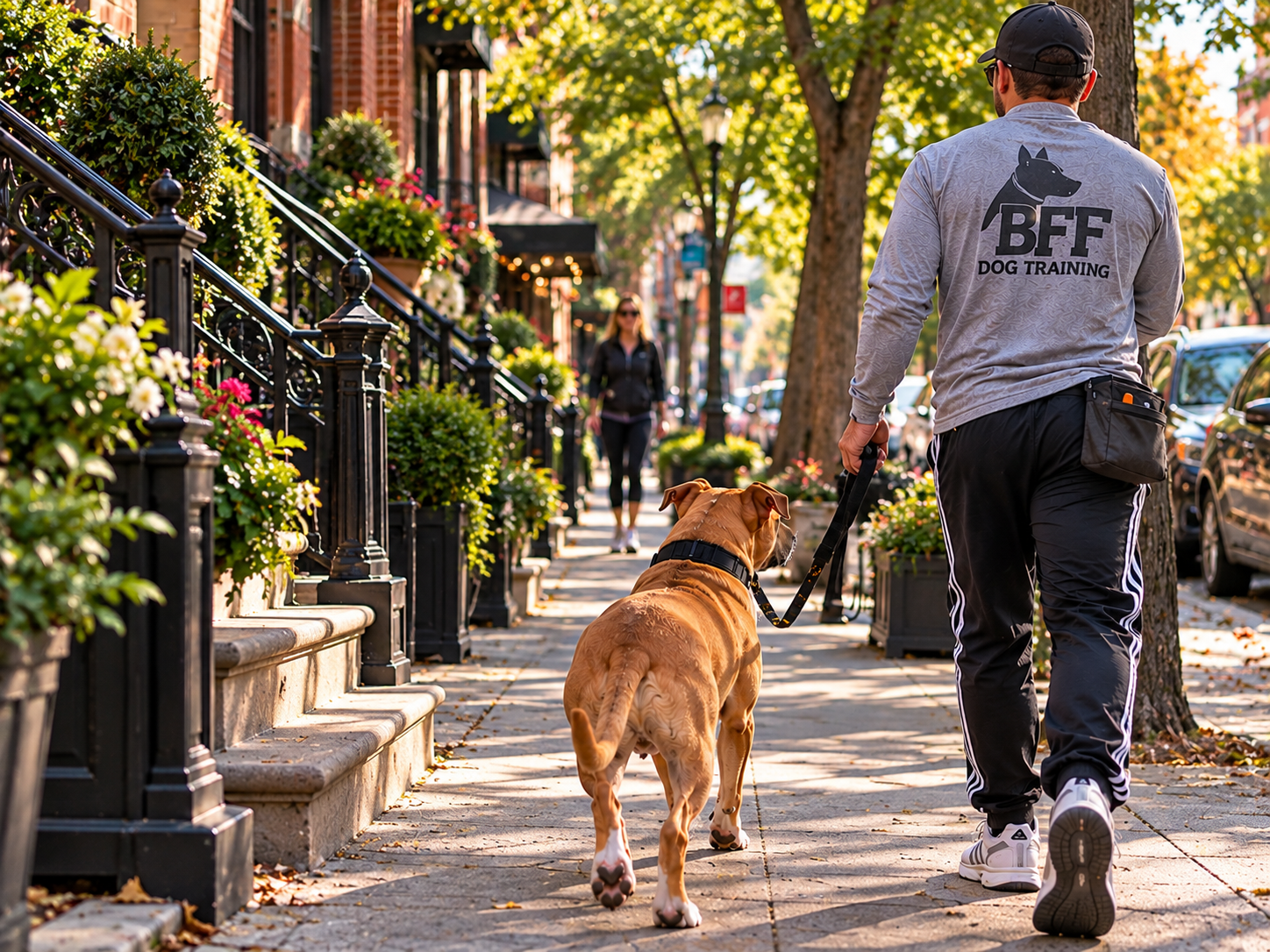
One of the biggest mistakes owners make is trying to work on reactivity during an ordinary walk.
A dog pulls.
Another dog appears.
Emotions take over.
The opportunity to train disappears.
Reactivity training should be planned, not accidental.
Your first sessions should be designed specifically for learning.
Prepare Before You Train
Success begins before you clip on the leash.
Know what you’re trying to accomplish before leaving home.
Actions
Whenever possible, progress through controlled training setups in this order:
- Helper dog.
- Fenced dog.
- Controlled exposure near a dog park.
- Random dog encountered on a walk.
Then:
- Choose your location.
- Set one specific goal.
- Mentally rehearse possible scenarios: “If this happens… I’ll do this.”
- Gather everything you’ll need before leaving.
Why This Matters
Having a plan makes you less likely to react emotionally when something unexpected happens.
Instead of making decisions under pressure, you’re following a plan you’ve already created.
Stay one step ahead of your dog.
Learn to predict what they’re likely to do before they do it.
Warm-Up
Never begin reactivity work the moment you arrive.
Give yourself and your dog a few minutes to settle into training mode.
Actions
- Practice loose-leash walking.
- Review a few obedience exercises.
- Work on environmental thresholds when appropriate.
- Make sure your dog is engaged before increasing the difficulty.
Why This Matters
Pick a sport – whether it’s played on a field, a court, or anywhere else.
Professional athletes don’t show up and immediately start competing.
They warm up.
If you want professional results, pay attention to what professionals do.
A few minutes of preparation can completely change the outcome of a training session.
Loose-Leash Walking During the Session
Throughout the session, your dog should NEVER be pulling on the leash.
Let me say that again.
Your dog should NEVER be pulling on the leash.
Ideally, the leash remains loose throughout the entire exercise.
Your dog has one simple responsibility:
Don’t pull.
That rule becomes the foundation for everything that follows.
If the leash stays loose, your dog is making a good decision.
When it becomes tight, you’ve received valuable information:
Your dog is beginning to lose self-control.
BFF PRO TIP
If you ever feel lost during a training session…
Go back to loose-leash walking.
It solves far more problems than most people realize.
Freedom of Response
One of the biggest mistakes people make is trying to control every decision their dog makes.
Instead…
Give your dog the opportunity to think.
During these sessions, there are only two rules:
- Don’t pull.
- Don’t react.
Everything else is your dog’s decision.
Allow your dog to:
- Sniff.
- Explore.
- Observe.
- Move naturally.
- Process the environment.
Avoid unnecessary obedience commands.
If your dog voluntarily offers obedience, acknowledge it and release them back to making their own decisions.
Why This Matters
Dogs become better decision-makers by practicing making decisions.
If we constantly tell them exactly what to do, they’ll never learn to regulate themselves or develop the ability to make decisions – good or bad – on their own.
The goal isn’t to create a robot.
The goal is to create a dog capable of making good choices without constant instruction.
Key Takeaway
Reward the decision – not the performance.
That’s where lasting behavioral change begins.
Address the Undesired Response
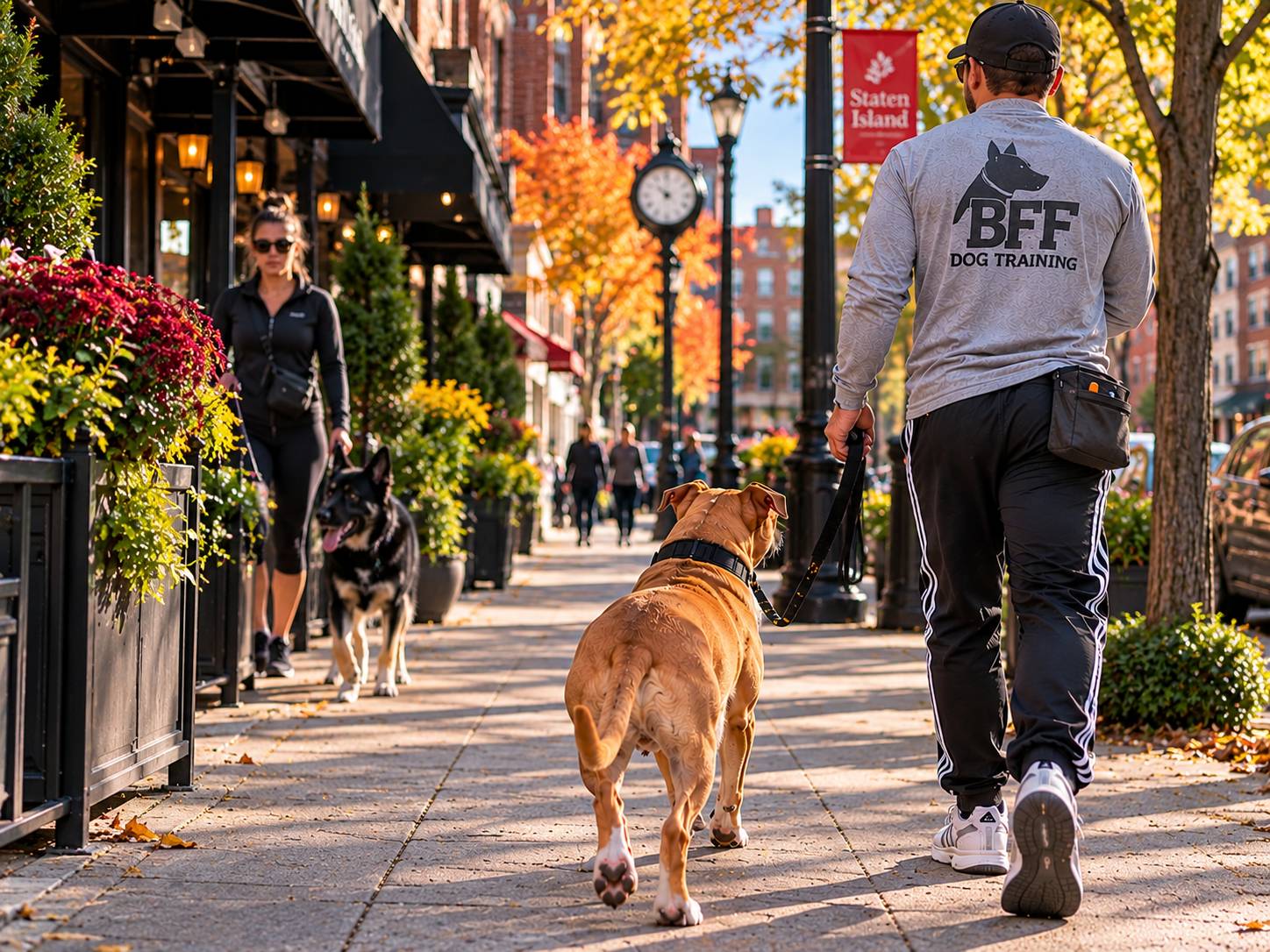
If your dog makes the wrong decision, respond immediately.
The moment the reaction begins:
“NO.”
Then apply the consequence your dog has already been taught to understand.
This isn’t the time to introduce a new correction or training tool. Whatever consequence you’re using should already have been taught during your foundation work, in a controlled environment where your dog could clearly understand it.
The goal isn’t anger.
The goal is clarity.
Consequences must be:
- Immediate.
- Meaningful.
- Consistent.
If reacting sometimes works, your dog has a reason to keep trying it.
BFF PRO TIP
Especially early in training, address the large, obvious reactions.
Don’t punish “thought crimes.”
Looking at another dog isn’t the problem.
Reacting is.
Key Takeaway
Corrections should never come from anger or frustration.
Clear communication builds trust.
Reinforce the Desired Response
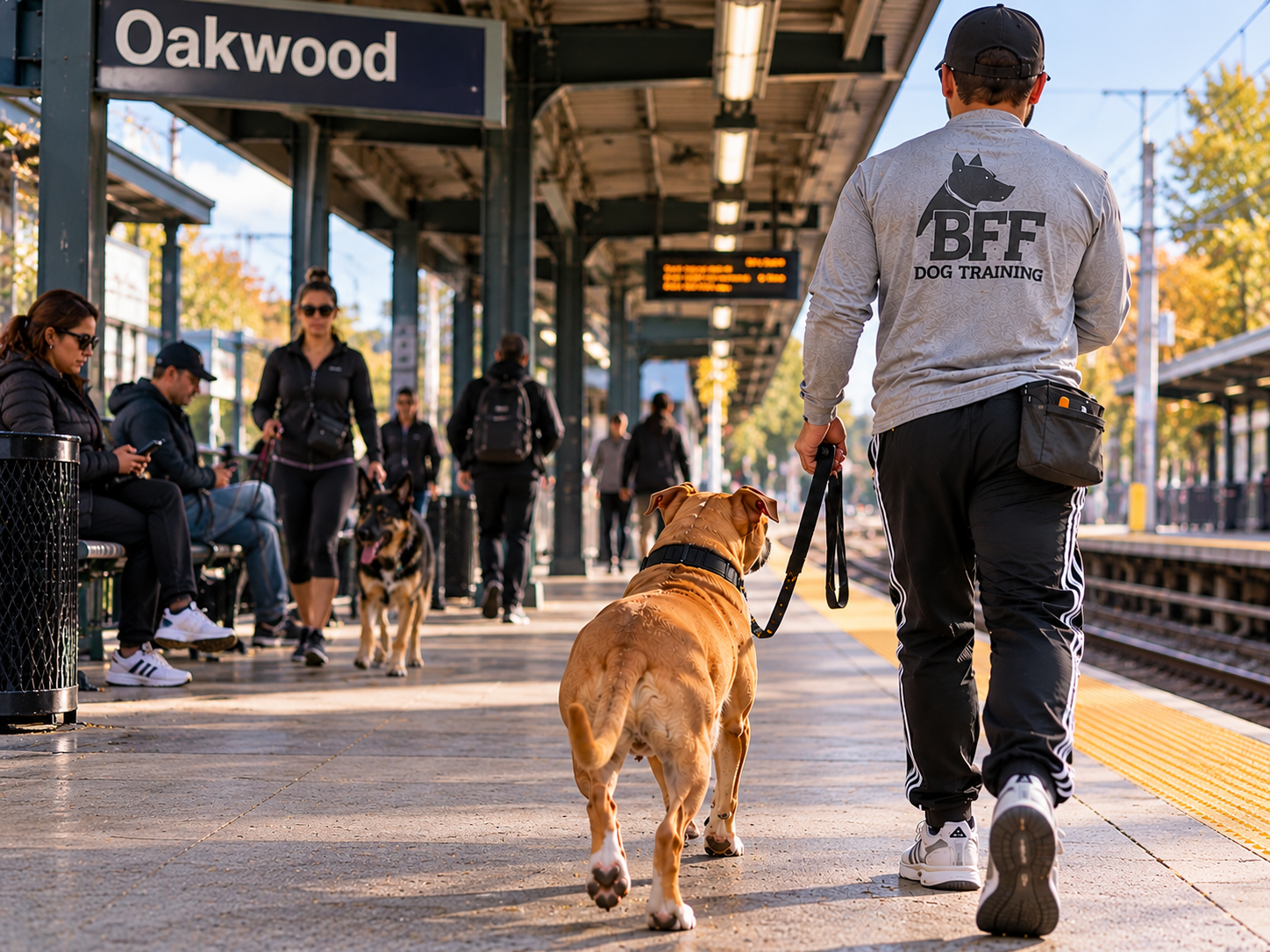
When your dog makes a good decision, acknowledge it.
For example:
- Looks at the dog… then looks away.
- Looks at the dog… then sniffs.
- Looks at the dog… then calmly checks in with you.
Reward calm choices with praise, food, play, or simply continuing the walk.
Avoid creating repetitive reward loops.
The goal isn’t to teach your dog to stare at you.
The goal is to teach your dog to comfortably exist around other dogs.
Key Takeaway
Good decisions become habits when they’re consistently acknowledged.
Increase the Difficulty
Once your dog is consistently succeeding, gradually make the exercise more challenging.
Actions
- Reduce distance gradually.
- Add movement.
- Increase environmental distractions.
- Work around different dogs.
- Continue giving your dog opportunities to sniff, relax, play, and decompress.
BFF PRO TIP
Progress isn’t measured by how quickly you make training harder.
It’s measured by how consistently your dog succeeds before you do.
Key Takeaway
Don’t rush progress.
Build it.
STEP 4: CREATE LASTING CHANGE
By this point, your dog should understand the rules.
Now the goal changes.
You’re no longer teaching what the rules are.
You’re teaching your dog that the rules apply everywhere.
Generalization
Dogs don’t automatically apply something learned in one environment to every other situation.
Your dog may understand that reacting isn’t acceptable:
- At one park.
- Around one helper dog.
- On one particular day.
That doesn’t mean they understand it everywhere.
Actions
Gradually change:
- Locations.
- Dogs.
- Environments.
- Distraction levels.
Why This Matters
Dogs are incredible pattern learners.
The more situations they successfully navigate, the more they understand that expectations remain consistent.
Eventually, calm behavior becomes normal.
BFF PRO TIP
Don’t keep changing the rules.
Keep changing the environment.
Key Takeaway
Train everywhere…
So your dog succeeds anywhere.
Consistency
Consistency is where good training becomes great training.
If the rules change depending on your dog’s mood, the weather, who’s watching, or how busy you are, your dog learns that the rules are arbitrary.
Imagine driving on a highway where speeding tickets were issued only once every few months.
Most people would keep speeding.
Dogs learn from inconsistent consequences too.
If your dog could write in a journal, the last thing we would want to see them write is:
“I have absolutely no idea what the rules are today.”
Make the rules fair.
Make them clear.
Then enforce them consistently.
Key Takeaway
Consistency creates clarity.
Clarity creates confidence.
Confidence changes behavior.
Shift Your Focus
Early in training, it’s easy to become completely focused on stopping reactivity.
Eventually…
That shouldn’t be your focus anymore.
Go enjoy your dog.
Take longer walks.
Visit new places.
Ride your bike.
Explore hiking trails.
Spend time together.
Your dog deserves a life that isn’t centered around avoiding problems.
And so do you.
Training isn’t the destination.
It’s what makes the destination possible.
Next-Level Play
Once your dog understands the rules, play becomes even more valuable.
Use it to build confidence.
Use it to reduce stress.
Use it to strengthen your relationship.
For fearful dogs, winning games of tug can help build confidence.
For high-arousal dogs, blend obedience into play to develop self-control without taking away the fun.
BFF PRO TIP
Rarely is the strongest training tool in your toolbox another correction.
It’s much more likely to be five more minutes of playtime.
Facilitating Productive Social Interactions
Only begin this stage after:
- Reactivity has been eliminated.
- Your dog consistently makes good decisions.
- You feel confident handling your dog.
Start with calm, appropriate dogs.
Never rush introductions.
Never force interactions.
Sometimes the best social interaction is simply two dogs peacefully existing near one another.
That’s success.
Why This Matters
Your goal isn’t to create a dog that loves every dog.
Your goal is a dog that can peacefully coexist with other dogs.
Those are two very different things.
Key Takeaway
Neutrality is often far more valuable than sociability.
BFF TRAINING NOTE
This protocol was designed primarily for dogs with little or no formal obedience training.
Every dog is different.
Some dogs will move through these steps quickly.
Others will need additional time, repetition, or a modified approach.
Throughout your training program, we’ll adjust this protocol to match your dog’s personality, learning style, and progress.
The goal isn’t to force every dog through the exact same process.
The goal is to give every dog and pet owner the training they need to become successful.
FINAL THOUGHTS
Reactive behavior develops and continues for different reasons, but one thing is extremely important to understand:
At some point, your dog’s overreactions worked.
For some dogs, reacting creates distance.
For others, it releases excitement or frustration.
Either way, your dog isn’t trying to make your life difficult.
They’re doing what they believe works.
Your job isn’t to fight your dog.
Your job is to teach them a better way to deal with their reactivity.
There will be days when everything seems easy.
There will be days when it feels like nothing is improving.
Your dog will make mistakes.
You will too.
And so will we.
That’s part of learning.
Keep your emotions out of training.
Trust the process.
Celebrate the small victories.
Laugh at the mistakes.
We’ll all make plenty of them.
Most importantly…
Keep training fun.
If your dog believes you’re the best part of their day, they’ll want to learn from you.
Training isn’t about creating a different dog.
It’s about helping the dog you already love learn a new language.
And if you aren’t bilingual when this journey begins…
You will be when it’s over.
You’ll speak Dog.
Congratulations in advance.
See you at our next session.

